Week 337: Madhavdev + Aesthetic!
05/30/2026 - Modern Hindu Content
Welcome to Eternal Path! This week we feature: Madhavdev and an aesthetic!
Person Highlight: Madhavadeva
Madhavadeva (1489-1596 CE) was an Assamese Hindu reformer and guru and proponent of the Vaishnavite sect known as Ekasarana Dharma.
Early Life
He was born to Govindagiri and Manorama Devi in 1489 in a village in Lakhimpur, Assam in a Kayastha family. His father came from modern day Bangladesh and was a learned man, while his mother, Govindagiri’s second wife (he was a widower) was distantly related to the great Assamese guru Srimanta Sankaradeva.
As a child he excelled in sports, but his father came across hard economic times, forcing the family to move around. After the marriage of Madhavdeva’s sister, things started to improve. Manorama stayed with Madhava’s sister, and Govindagiri and Madhava moved in with one of Govinda’s sons from his first marriage near Rangpur (present-day Bangladesh). There, Madhava began learning Sanskrit and accounting. After a few years, Govindagiri died and Madhava and his step-brother had quarrels, leading Madhava to seek out his mother. En route to reconnecting with his mother, he received word that his mother was sick, and vowed to conduct a ritual to Goddess Durga for her health. When he returned to Assam, he got into an argument with his brother-in-law, a devotee of Sankaradeva, who refused to allow him to sacrifice a goat for his mother’s health. His brother-in-law told him that Sankaradeva would provide all the necessary arguments against animal sacrifice, and Madhava agreed to debate him.
As a Vaishnavite
After a long and arduous debate, Madhava accepted the worldview of Sankaradeva and took him as his guru. He went across Assam, preaching and attending religious sessions. Soon after, persecution by the Ahom Kingdom led to Sankaradeva and Madhavadeva to migrate to Western Assam after the invasion of the Ahom Kingdom by the Koch. By this time Madhavadeva had become the principal disciple of Sankaradeva. Then Madhavadeva went on a long religious pilgrimage to places like Puri, and Bodh Gaya, and even met with the granddaughter of the Saint Kabir.
After Sankaradeva’s death, Madhavadeva became his successor and appointed 12 apostles to preach Ekasarana Dharma across Assam. These apostles established the famous sattras of Assam which served as quasi-monastic centers of learning and community gathering, and still are a major part of the Assamese cultural landscape today.
During his time there was a schism in the followers of Sankaradeva’s tradition, with many joining the sect of Damodaradeva, a more traditionalist Brahmin disciple of Sankaradeva. Additionally faced obstacles from different Kings and rival religious sects. Nevertheless he generated a prodigal amount of literature.
His Works
Madhavdev wrote mainly in Brajavali (a localized version of Maithili used by Sankaradev), and Assamese, though he also had a strong command of Sanskrit. Writing in Brajavali, and later Assamese allowed him to spread his religious thoughts much more easily.
His most famous work was the Naam Ghosa, also his final work before his death. It consists of 1001 verses praising Lord Krishna, of which about a third have their roots in the Bhagavad Gita and the Mahabharata. The text also declares the universal equality of mankind.
Some of his other literary works include:
Bhakti Ratnavali: A profound theological treatise emphasizing complete, emotional surrender to Krishna.
Borgeets: He composed 191 spiritual and highly melodic songs that remain foundational to Assamese classical culture.
Janma Rahasya: His earliest literary creation, which details the creation and destruction of the world.
Guru Bhatima: poem composed in praise of his guru Sankardev.
Adi Kanda: Assamese translation of the first canto of Valmiki’s Ramayana
Madhavdev also wrote plays, to help teach Vaishnavite theology and morality to the masses. These plays called jhumuras are another jewel in Assamese literary culture.
Chordhara Jhumura (The butter thief)
Pimpara Gucova Jhumura (Clearing the ants)
Bhumi Letova Jhumura (Rolling on the ground)
Bhojana Bihara Jhumura (The picnic/feast)
Arjun Bhanjan (also known as Dadhimathan - churning of curd)
Ras Jhumura
Bishnu Haran
Koumar Haran
Bhushon Haran
These plays are still widely performed today across Assam.
An example of a song written by Madhavdev is provided below:
Death and Succession
Madhavdev passed away in 1596 after writing the Naam Ghosa, which he also termed as the guru and guiding book for his disciples. Rather than naming a successor, he appointed his most trusted disciples to head various sattras, decentralizing the religious community and allowing it to become more anti-fragile and for the sattrasto better serve the communities in which they were located.
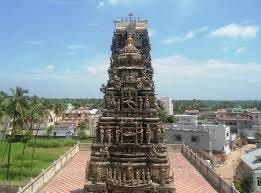
Aesthetic: Andhra Pradesh Temple